Introduction
Indoor air quality has moved to the forefront of building management discussions over the past decade. Facility operators today are not only responsible for maintaining comfortable environments but also for ensuring that indoor air supports occupant health, operational reliability, and regulatory compliance in certain industries.
Modern buildings are often tightly sealed to improve energy efficiency. While this improves thermal performance, it can also allow airborne contaminants to accumulate if ventilation and filtration systems are not properly designed.
As a result, organizations across healthcare, manufacturing, and commercial sectors are investing in advanced filtration technologies that can control microscopic airborne particles.
Among these technologies, the HEPA filter remains one of the most widely trusted solutions for improving indoor air quality in controlled environments.
Why Indoor Air Quality Matters More Than Ever
Indoor air quality has become a strategic concern for facility managers and building operators. Studies from organizations such as the EPA and the World Health Organization indicate that indoor air can contain a mixture of pollutants ranging from fine particulate matter to microbial contaminants.
Several factors contribute to declining indoor air quality in modern buildings:
- Outdoor pollutants entering through ventilation systems
- Dust generated by building occupants and equipment
- Particulate emissions from industrial processes
- Biological contaminants such as bacteria, pollen, and mold spores
Poor air quality in commercial buildings can impact both comfort and employee productivity. Airborne particles in industrial environments may interfere with sensitive equipment and disrupt manufacturing processes. In healthcare settings, maintaining strict control over airborne contamination is essential.
Because of these challenges, organizations increasingly invest in advanced indoor air quality solutions designed to maintain stable, clean indoor environments.
How HEPA Filtration Systems Improve Air Quality
HEPA filtration is considered one of the most effective methods for removing microscopic airborne particles from circulating air.
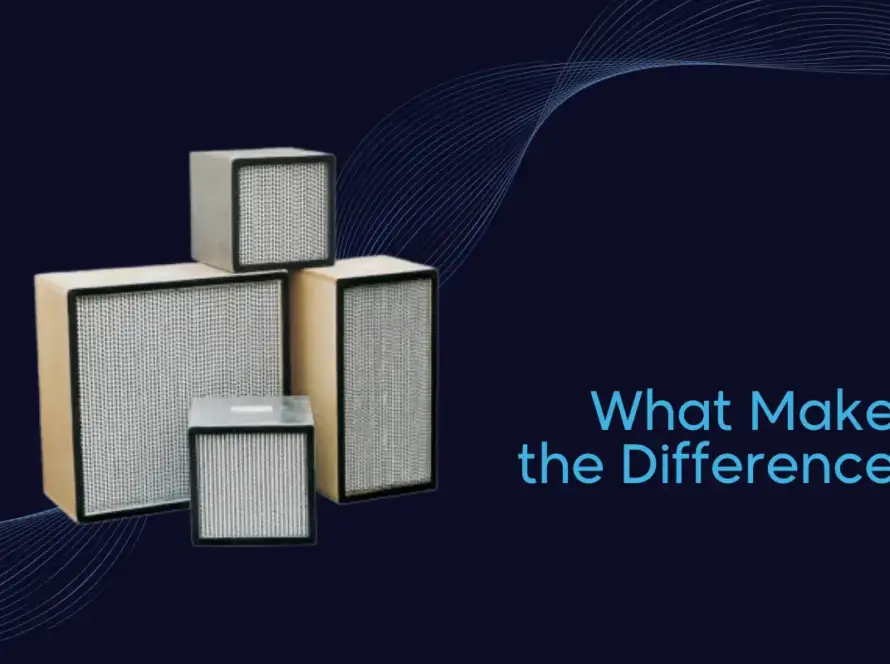
A HEPA filter consists of a dense mat of randomly arranged microfibers designed to capture particles as air passes through the filter media. Unlike simple surface filtration, HEPA filters rely on multiple physical mechanisms that trap particles inside the filter structure.
These mechanisms include:
- Impaction, where larger particles collide with fibers
- Interception, where particles following airflow paths contact filter fibers
- Diffusion, where extremely small particles move randomly and become trapped
Because of this combination of mechanisms, HEPA filters are capable of capturing extremely fine particles.
According to established filtration standards, a true HEPA filter must capture at least 99.97 percent of airborne particles measuring 0.3 microns in diameter. This particle size is considered one of the most challenging to capture, which makes it a useful benchmark for filtration performance.
In most HVAC systems, HEPA filtration is implemented as the final stage in a multi-stage filtration process, where prefilters remove larger contaminants before the air reaches the HEPA filter.
Key Benefits of HEPA Filters
The benefits of HEPA filters extend beyond basic particle removal. In many controlled environments, they play a central role in maintaining stable air conditions.
Removal of Fine Airborne Particles
One of the most significant advantages of HEPA filtration is its ability to capture extremely small airborne particles. These include fine dust, pollen, smoke particles, and other microscopic contaminants that may pass through conventional filters.
Removing these particles helps maintain cleaner air throughout the building.
Improved Indoor Air Quality for Occupants

Cleaner air contributes to healthier indoor environments. In offices, hospitals, and public buildings, HEPA filtration can reduce the concentration of airborne particulate matter circulating through the ventilation system.
This supports overall environmental quality within occupied spaces.
Protection for Sensitive Environments
Many industries require strict air cleanliness standards. Pharmaceutical manufacturing, hospital operating rooms, and research laboratories all depend on highly controlled air conditions.
HEPA filtration helps prevent airborne contaminants from entering these sensitive environments.
Reduction of Airborne Contamination
Industrial production processes often generate fine particulate matter that can circulate within a facility if not properly filtered.
HEPA filters help control the spread of airborne particles, supporting both operational safety and equipment protection.
Air Cleanliness in Controlled Facilities
Cleanrooms, laboratories, and specialized manufacturing facilities depend on extremely low levels of airborne particles. HEPA filtration systems help maintain these conditions by continuously removing microscopic contaminants from the air.
Industries That Benefit from HEPA Filtration
Because of their high efficiency, HEPA filters are widely used in environments where air cleanliness is critical.
- Healthcare facilities rely on HEPA filtration in operating theaters, isolation rooms, and other areas where controlling airborne contamination is essential.
- Pharmaceutical manufacturing plants depend on HEPA filtration to maintain sterile production environments and protect product integrity.
- Cleanrooms and research laboratories require extremely low particle counts, which are maintained through specialized HEPA filtration systems.
- Commercial buildings may incorporate HEPA filtration in high-priority areas or specialized air purification units where improved air quality is required.
- Data centers also benefit from high-efficiency filtration, as airborne particles can accumulate on sensitive electronic components and affect performance.
- Industrial production facilities use HEPA filtration to reduce airborne particulate matter generated during manufacturing processes.
HEPA Filters as Part of Modern Indoor Air Quality Solutions
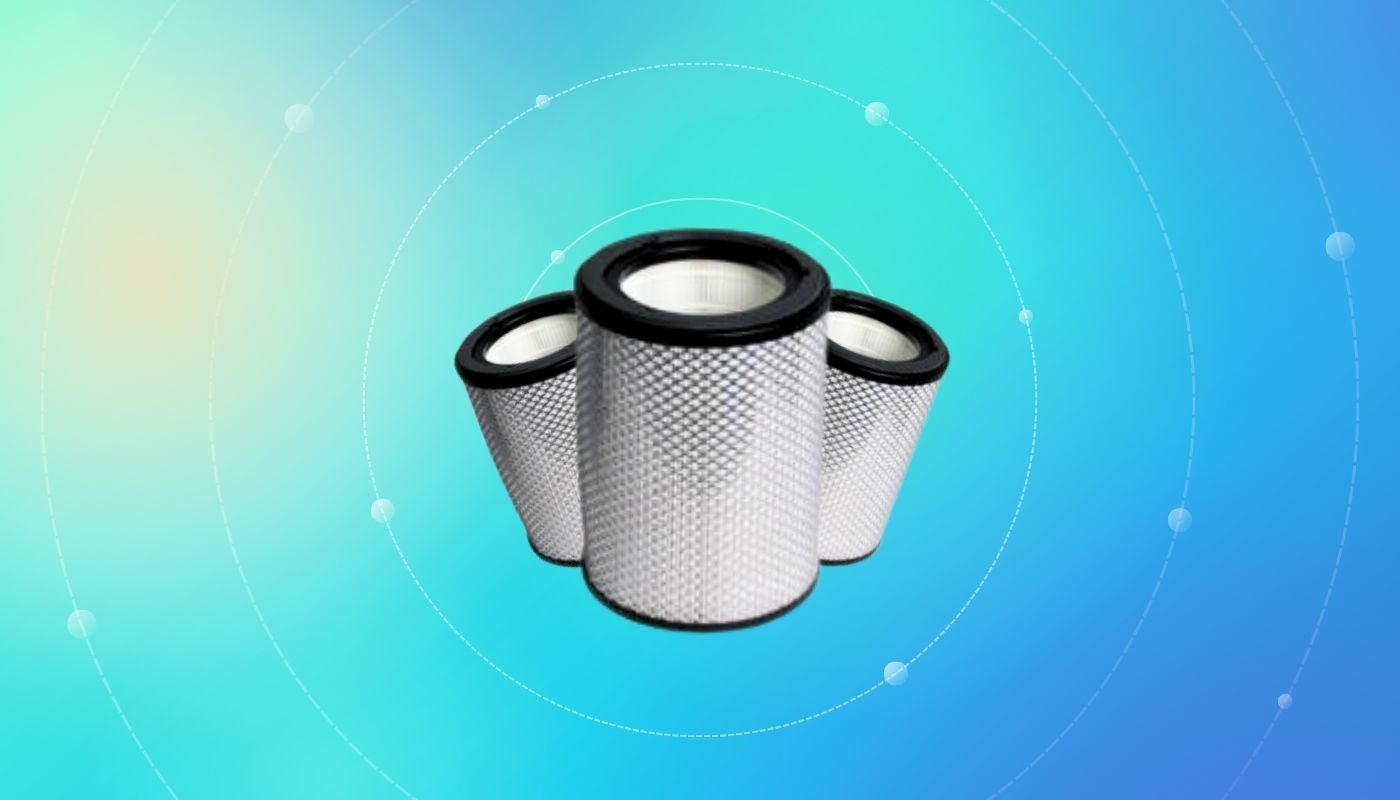
Although HEPA filters are highly effective, they are rarely used in isolation. Instead, they are integrated into broader indoor air quality solutions that combine filtration, ventilation, and airflow management.
In most modern HVAC systems, air passes through several stages of filtration before reaching occupied spaces. Prefilters capture larger dust particles, fine filters remove smaller particulates, and HEPA filtration provides the final stage of high-efficiency particle removal.
Additional technologies such as air purification systems, pressure-controlled environments, and specialized ventilation strategies may also be used to maintain indoor air quality in demanding environments.
For organizations operating large facilities, selecting the right filtration components and system design is critical. Suppliers with expertise in air filtration technologies play an important role in supporting these systems by providing reliable filtration solutions tailored to different industries.
Conclusion
As awareness of indoor air quality continues to grow, organizations are placing greater emphasis on effective air filtration strategies. Maintaining clean indoor air is essential not only for occupant wellbeing but also for protecting sensitive equipment and maintaining controlled operational environments.
The HEPA filter remains one of the most trusted technologies available for removing microscopic airborne particles. With the ability to capture extremely fine contaminants with high efficiency, HEPA filtration systems play an essential role in improving indoor air quality across a wide range of industries.
From healthcare facilities to industrial production environments, the benefits of HEPA filters make them a critical component of modern indoor air quality solutions. When integrated into well-designed HVAC systems, HEPA filtration helps organizations maintain cleaner, safer, and more controlled indoor environments.
Disclaimer
The information provided in this article is intended for general educational and informational purposes related to air filtration and indoor air quality practices. While every effort has been made to ensure technical accuracy, filtration performance and system effectiveness can vary depending on specific HVAC design, environmental conditions, maintenance practices, and regulatory requirements.
Organizations should consult qualified HVAC engineers or indoor air quality specialists when selecting filtration systems for critical environments. References to HEPA filtration performance align with widely recognized standards and guidance from organizations such as ASHRAE, the U.S. Environmental Protection Agency (EPA), and international filtration standards.
ABM General Trading supplies filtration products and solutions for commercial and industrial applications; however, system design and implementation decisions should always be made in consultation with appropriate engineering professionals.
References and Technical Sources
- ASHRAE – American Society of Heating, Refrigerating and Air-Conditioning Engineers
ASHRAE Handbook – HVAC Systems and Equipment
https://www.ashrae.org - U.S. Environmental Protection Agency (EPA)
Guide to Air Cleaners in the Home
https://www.epa.gov/indoor-air-quality-iaq - World Health Organization (WHO)
WHO Guidelines for Indoor Air Quality
https://www.who.int - ISO 29463 – High Efficiency Filters and Filter Media for Removing Particles from Air
- EN 1822 – High Efficiency Air Filters (EPA, HEPA, ULPA)
- Camfil Filtration Engineering Resources
Fundamentals of Air Filtration
FAQ
1. Can HEPA filters remove dust and fine pollutants?
Yes. A properly designed HEPA filter can remove a wide range of airborne particles, including dust, pollen, fine particulate matter, and other microscopic pollutants.
HEPA filtration works through a dense network of fibers that capture particles as air flows through the filter media. According to established filtration standards, a true HEPA filter captures at least 99.97% of airborne particles measuring 0.3 microns in diameter, which is considered one of the most challenging particle sizes to remove.
Because of this high efficiency, HEPA filters are commonly used in environments where controlling fine airborne particles is important, including healthcare facilities, laboratories, and high-performance HVAC systems.
2. Do HEPA filters help in commercial and industrial spaces?
Yes, HEPA filtration can play an important role in maintaining air quality in many commercial and industrial environments.
In commercial buildings such as offices, hotels, and public facilities, HEPA filtration may be used in specialized air purification systems or critical zones to help improve indoor air cleanliness.
In industrial facilities, HEPA filters are often used to control airborne particulate matter generated by manufacturing processes. They help maintain cleaner working environments and protect sensitive equipment from particle contamination.
Because of their high filtration efficiency, HEPA filtration systems are widely used where consistent air quality is required.
3. Do HEPA filters reduce airborne bacteria?
HEPA filters can capture many airborne bacteria because these microorganisms typically attach themselves to particles that are large enough to be trapped by HEPA filter media.
Most bacteria range in size from 0.5 to several microns, which falls within the particle capture capability of HEPA filters. As air passes through the filtration system, these particles are trapped within the filter fibers.
For this reason, HEPA filtration is commonly used in healthcare environments, pharmaceutical manufacturing, and laboratories where controlling airborne microbial contamination is important.
4. How often do HEPA filters need to be replaced?
The replacement interval for a HEPA filter depends on several factors, including airflow volume, environmental conditions, and the amount of particulate matter present in the air.
In many HVAC applications, HEPA filters may last between 6 months and 2 years, though this can vary significantly depending on system design and operating conditions. Facilities with higher dust loads or industrial processes may require more frequent replacement.
To maintain optimal performance, facility managers typically monitor filter pressure drop or follow maintenance schedules recommended by the system manufacturer.
5. Are HEPA filters energy efficient?
HEPA filters are highly effective at particle removal, but they generally create more airflow resistance than standard filters because of their dense filtration media.
To maintain energy efficiency, HEPA filters are usually used as part of a multi-stage filtration system that includes prefilters and fine filters. These earlier stages capture larger particles before the air reaches the HEPA filter, which helps extend filter life and reduce pressure drop.
When properly integrated into an HVAC system, HEPA filtration can provide excellent air cleaning performance while maintaining reasonable energy efficiency.