Introduction
Air quality has become a central concern in modern buildings and industrial environments. Whether in hospitals, laboratories, or large commercial facilities, controlling airborne particles is essential for protecting equipment, processes, and human health.
This is where advanced filtration technologies play an important role. Among them, the HEPA filter stands out as one of the most reliable solutions for removing extremely small airborne particles from circulating air.
HEPA filtration is widely used in environments where clean air is critical. Healthcare facilities rely on it to reduce airborne contaminants, laboratories use it to maintain sterile conditions, and commercial HVAC systems integrate it to improve indoor air quality. In industries that operate sensitive equipment or controlled processes, these filters often form the backbone of modern air purification systems.
Understanding how HEPA filters work helps facility managers, engineers, and procurement teams choose the right filtration solutions for their environments.
What Is a HEPA Filter?
A HEPA filter (High Efficiency Particulate Air filter) is a type of mechanical air filter designed to capture extremely small particles suspended in the air. The filter is made from a dense mat of randomly arranged fibers, typically composed of fiberglass or synthetic materials. Air passes through this complex web of fibers, where particles are trapped before the air continues through the system.
To meet official HEPA standards, a filter must remove at least 99.97% of airborne particles that are 0.3 microns in diameter. This benchmark is widely recognized in filtration standards used in HVAC engineering and air purification technologies.
Particles of this size are often called the “most penetrating particle size” because they are among the most difficult to capture. If a filter can efficiently capture particles around 0.3 microns, it can generally capture both larger and smaller particles as well.
This extremely high capture rate is why HEPA filters are commonly used in environments where fine particle filtration is critical. Compared with standard air filters, HEPA filtration provides a much higher level of air cleanliness.
How HEPA Air Filter Working Actually Happens
The HEPA air filter working principle is often misunderstood. Many people assume these filters operate like a simple sieve that blocks particles larger than a certain size. In reality, the filtration process is more complex.
HEPA filters capture particles through three primary mechanisms:
1. Interception
Interception occurs when airborne particles follow the airflow through the filter but come close enough to a fiber that they stick to it.
Imagine dust particles traveling with the airflow through a maze of fibers. When a particle passes close to one of those fibers, it touches the surface and becomes trapped.
This mechanism is especially effective for medium-sized particles, such as mold spores or fine dust.
2. Impaction
Impaction mainly affects larger particles.
When airflow moves through a filter, it bends around the fibers. Smaller particles can follow these curves, but larger particles have more inertia. Instead of changing direction with the airflow, they continue moving straight and collide with the fibers.
Once they strike the fiber surface, they remain embedded in the filter media.
3. Diffusion
Diffusion is responsible for capturing the smallest particles.
Very small particles behave differently from larger ones because they are constantly bouncing around due to collisions with air molecules. This random motion, known as Brownian motion, causes them to move erratically.
As these particles move through the filter, their unpredictable path increases the chance that they will collide with a fiber and stick to it.
Together, these three mechanisms allow HEPA filters to capture particles across a wide range of sizes. This layered capture process is what makes fine particle filtration possible.
The Role of Fine Particle Filtration
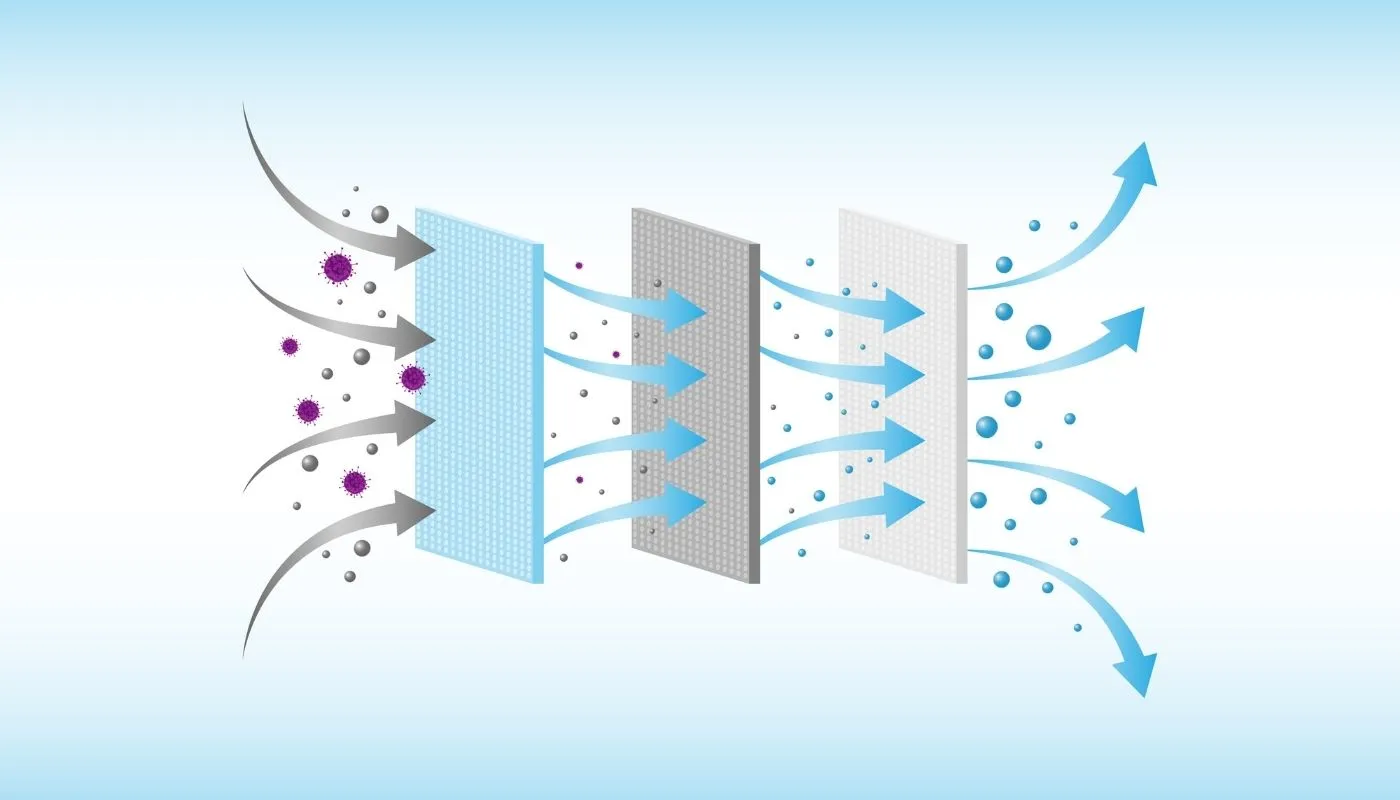
Many airborne pollutants are too small to be captured by basic filters. Yet these microscopic particles often have the greatest impact on air quality.
Examples of common airborne particles include:
- Dust and fine particulate matter
- Pollen and plant debris
- Mold spores
- Bacteria and microorganisms
- Industrial pollutants and microscopic contaminants
Without effective filtration, these particles can circulate continuously through ventilation systems and indoor environments.
This is why fine particle filtration is so important in modern buildings. High-efficiency filters like HEPA systems help remove these contaminants from the air before they spread through occupied spaces.
In healthcare environments, for example, controlling airborne microorganisms is essential for infection control. In laboratories and pharmaceutical facilities, microscopic contamination can compromise research or manufacturing processes.
HEPA filtration helps reduce these risks by capturing particles that standard HVAC filters cannot remove effectively.
Where HEPA Filters Are Used
Because of their high efficiency, HEPA filters are used in a wide range of environments where clean air is essential.
Hospitals and Healthcare Facilities
Hospitals rely heavily on HEPA filtration in operating rooms, isolation wards, and intensive care units. These filters help reduce airborne pathogens and maintain controlled sterile conditions.
Cleanrooms and Laboratories
Research laboratories and semiconductor cleanrooms require extremely clean environments. HEPA filtration helps maintain strict particle control standards necessary for sensitive experiments and manufacturing processes.
Pharmaceutical Manufacturing
Drug manufacturing facilities must maintain highly controlled environments to prevent contamination during production. HEPA filters are commonly integrated into pharmaceutical cleanrooms.
Commercial Buildings
Large commercial buildings often use HEPA filters in specialized HVAC systems to improve indoor air quality and reduce fine dust circulation.
Data Centers and Controlled Environments
In data centers and other technical facilities, clean air systems protect sensitive electronic equipment from dust accumulation and airborne particles.
HEPA Filters in HVAC and Clean Air Systems

HEPA filters are often integrated into advanced HVAC installations and specialized clean air systems designed for controlled environments.
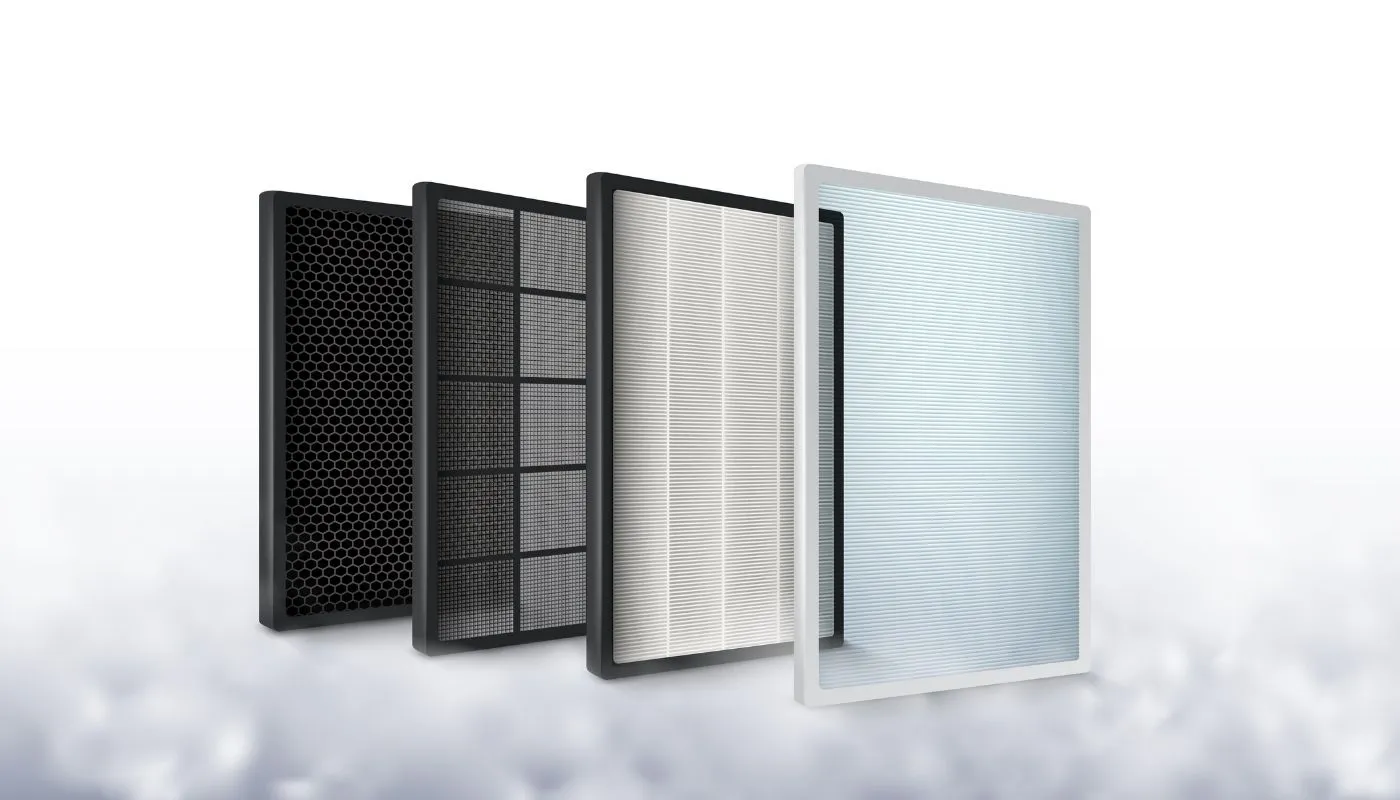
In a typical setup, air passes through several filtration stages. Pre-filters remove larger dust particles first, protecting the more sensitive HEPA filters downstream. The HEPA filter then performs the final stage of fine particle filtration, capturing microscopic contaminants before air enters the occupied space.
While highly effective, HEPA filters require proper system design. Because of their dense structure, they create more resistance to airflow than standard filters. Engineers must ensure that HVAC systems can maintain proper airflow while using these high-efficiency filters.
Maintenance is also an important factor. Over time, captured particles accumulate within the filter media. To maintain performance and airflow efficiency, filters must be replaced at recommended intervals.
When correctly integrated and maintained, HEPA filters play a key role in maintaining consistent air quality in modern ventilation systems.
Conclusion
Airborne particles are present in almost every indoor environment, but controlling them is essential in many industries. From hospitals and laboratories to commercial facilities, clean air has become a critical component of safe and efficient operations.
The HEPA filter remains one of the most effective technologies for removing microscopic contaminants from the air. By combining interception, impaction, and diffusion, HEPA filtration systems can capture particles as small as 0.3 microns with extremely high efficiency.
As industries continue to prioritize indoor air quality, clean air systems that incorporate HEPA filtration will remain an important part of modern building infrastructure.
For organizations evaluating advanced filtration technologies, understanding how HEPA filters work is the first step toward selecting the right air filtration strategy for their environment. Companies such as ABM General Trading support this process by supplying filtration solutions used across industrial, commercial, and specialized facilities in the UAE and GCC.
Disclaimer:
The information provided in this article is intended for general educational purposes related to air filtration technologies and HVAC systems. While every effort has been made to ensure the accuracy of the technical explanations, filtration performance and system requirements may vary depending on equipment design, operating conditions, and environmental factors.
For specific filtration system recommendations, installation requirements, or product specifications, it is advisable to consult qualified HVAC professionals or filtration specialists.
ABM General Trading supplies a range of industrial and commercial filtration solutions, and the suitability of any filtration system should be evaluated based on the needs of the specific application.
Sources & References :
- United States Environmental Protection Agency (EPA) – Indoor Air Quality and HEPA filtration guidance
https://www.epa.gov/indoor-air-quality-iaq/what-hepa-filter - ASHRAE (American Society of Heating, Refrigerating and Air-Conditioning Engineers) – HVAC filtration and indoor air quality standards
https://www.ashrae.org - World Health Organization (WHO) – Indoor air quality and airborne contaminant control guidance
https://www.who.int - ISO 29463 – High-efficiency filters and filter media for removing particles from air
- EN 1822 Standard – High efficiency particulate air filters (EPA, HEPA and ULPA)
- Filtration engineering and HVAC technical references on HEPA filtration mechanisms and air cleaning technologies.
FAQ
1. How does a HEPA filter remove fine particles from the air?
A HEPA filter removes fine particles through a combination of three filtration mechanisms: interception, impaction, and diffusion. As air flows through the dense network of fibers inside the filter, particles collide with the fibers and become trapped. Larger particles are captured through impaction, medium-sized particles through interception, and extremely small particles through diffusion caused by random molecular motion.
This multi-layered capture process allows HEPA filters to achieve very high levels of fine particle filtration, removing contaminants that standard air filters cannot effectively capture.
2. What particles can a HEPA filter remove?
HEPA filters are designed to capture a wide range of airborne particles, including:
- Dust and fine particulate matter
- Pollen
- Mold spores
- Pet dander
- Bacteria and microorganisms
- Smoke particles
- Microscopic airborne pollutants
Because a HEPA filter can capture particles as small as 0.3 microns with at least 99.97% efficiency, it is widely used in environments where high air purity is required.
3. Are all HEPA filters the same?
Not all HEPA filters are identical. While they must meet minimum filtration standards, HEPA filters can vary in terms of:
- filter media material
- airflow capacity
- pressure drop
- durability and lifespan
- classification levels such as H13 or H14
Different applications require different filter specifications. For example, cleanrooms and pharmaceutical environments often require higher-grade filters compared to commercial HVAC installations.
4. Where are HEPA filters commonly used?
HEPA filtration is used in many environments where clean air systems are essential. Common applications include:
- hospitals and healthcare facilities
- pharmaceutical manufacturing plants
- laboratories and research facilities
- cleanrooms and semiconductor manufacturing
- commercial HVAC systems in large buildings
- data centers and controlled environments
In these settings, HEPA filters help maintain consistent indoor air quality and prevent airborne contamination.
4. How is a HEPA filter different from a normal air filter?
Standard air filters typically capture larger dust particles and debris but are not designed to remove extremely small contaminants.
A HEPA filter, on the other hand, is engineered for high-efficiency filtration and must meet strict performance standards. By capturing at least 99.97% of particles at 0.3 microns, HEPA filters provide significantly higher filtration efficiency than conventional HVAC filters.
Because of this capability, HEPA filters are used in environments where precise fine particle filtration is necessary.